

How to Invest In Share Market as Beginners

In today’s world Investing is one of the most important and best way to build a good long term wealth. Moat of the people started investing in many different platforms. However, many beginners hesitate because they don’t understand how the stock market works. If you are new and searching for how to invest in share market for beginners, this complete guide will help you start safely and confidently.
In this detailed article, you will learn different types of stock market basics, how to open a Demat account, types of trading, beginner strategies, and risk management techniques etc.
Understand the Basics of the Share Market
Before entering in share market to invest your money, it is important to understand what the share market actually is. In simple terms share market is a valuable platform where investors simply buy and sell shares of different listed companies. Buying of a share simply means that you become a small owner of that company and will participate in its profit and loss.
What is the Share Market?
The Share Market is a valuable Government registered platform where shares of different publicly listed companies are simply get buy and sold. When you buy shares of a company, you become a small owner of that company and now onwards you will also participate in it’s profit and loss.

In India, shares are mainly get buy and sell on:
- National Stock Exchange (NSE):- National Stock Exchange (NSE) is one of the largest and most advanced stock exchanges in India, established in 1992 to bring transparency and electronic trading to the Indian capital market.
It provides a platform for buying and selling shares, derivatives, bonds, and other financial instruments in a regulated and secure environment. - Bombay Stock Exchange (BSE):- Bombay Stock Exchange (BSE) is Asia’s oldest stock exchange, established in 1875, and plays a major role in India’s capital market.
It provides a regulated platform for trading shares, mutual funds, bonds, and other financial instruments, ensuring transparency and investor protection.
These exchanges provide a regulated and secure environment for buying and selling stocks.
How the stock market works
How Stocks Are Bought and Sold
You cannot directly purchase shares from NSE or BSE. Stocks are bought and sold through a registered stock broker using a trading account. Investors can then place buy or sell orders through broker apps, and the transaction is executed electronically on stock exchanges like NSE or BSE.
The purchased shares are stored safely in a Demat account in digital form.
- A Demat Account – to hold shares electronically
- A Trading Account – to place buy/sell orders
- A Stock Broker – intermediary between you and the exchange
Today, everything can be done online using mobile trading apps.
1. Primary vs Secondary Market
Understanding this difference is important for beginners:
- Primary Market – Companies raise funds through IPO (Initial Public Offering).
- Secondary Market – Investors buy and sell shares among themselves after listing.
2. Important Terms for Beginners
- IPO – First public offering of shares
- Demat Account – Stores shares in digital format
- Trading Account – Used to execute transactions
- Market Capitalization – Total value of a company
- Bull Market – Rising market
- Bear Market – Falling market
Having clarity on these basics is the first step in learning how to invest in share market for beginners.
Choose a Reliable Broker and Open a Demat Account
To invest in the stock market, investor need a registered stock broker who acts as an intermediary between investor and the stock exchange. A broker provides a trading platform where investor can place buy and sell orders easily.
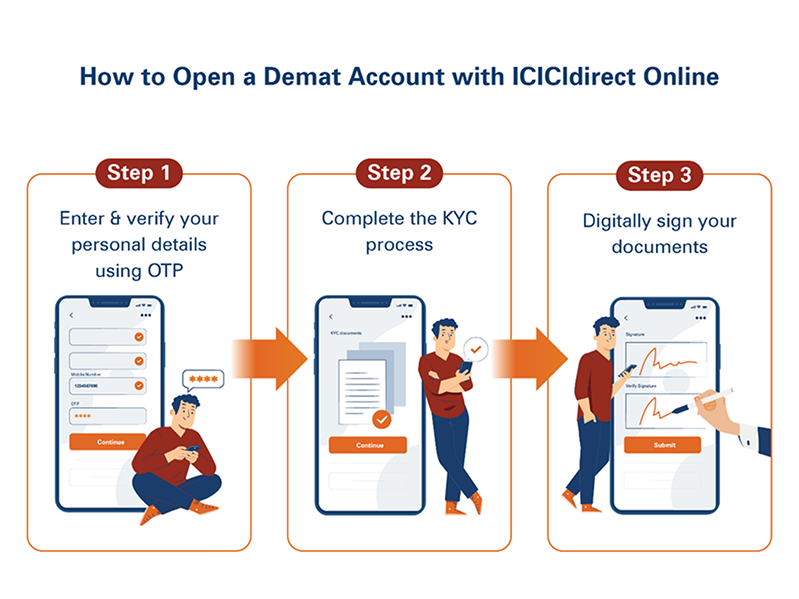
To start investing, investor must open a Demat account, which holds investor shares in electronic form. The account opening process is simple and requires basic documents like PAN card, Aadhaar card, and bank details.
1. Types of Brokers in India
Full-Service Brokers
- Provide research reports and advisory
- Higher brokerage charges
Discount Brokers
- Low brokerage fees
- Online platforms
- Suitable for beginners
Popular brokers in India include:
2. Documents Required to Open Demat Account
- PAN Card
- Aadhaar Card
- Bank Account
- Mobile number linked with Aadhaar
3. Steps to Open a Demat and Trading Account
- Visit broker website/app
- Complete online KYC
- Upload required documents
- Verify via OTP
- Account activated in 1–3 working days
4. Check These Charges Before Opening
- Brokerage fees
- Annual Maintenance Charges (AMC)
- DP charges
- Hidden platform fees
Lower costs improve your long-term investment returns.
Learn Different Types of Trading and Investing
Before start investing your money into the stock market, it is important to understand the different types of trading and investing styles. Each way involves a different time frame, risk level, and strategy, so beginners like you should choose the one that matches your goals and risk tolerance.
Different Types of Trading and Investing styles
The main types include intraday trading, swing trading, positional trading, and long-term investing. While short-term trading focuses on quick price movements, long-term investing focuses on holding fundamentally strong companies for years to benefit from steady growth and compounding.
1. Intraday Trading
Intraday trading involves buying and selling shares on the same trading day. All positions are closed before the market closes, and traders aim to profit from small price movements during the day.
It requires constant monitoring of the market, quick decision-making, and strong knowledge of technical analysis. Due to high volatility and risk, intraday trading is generally not recommended for beginners.
Points to remember :-
- Buy and sell on the same day
- High risk
- Requires experience and technical knowledge
How to Start Intraday Trading for Beginners
2. Swing Trading
Swing trading involves buying stocks and holding them for a few days to a few weeks to capture short-term price movements. Traders aim to benefit from market “swings” or trends rather than daily fluctuations.
It requires basic knowledge of technical analysis, chart patterns, and market trends. Compared to intraday trading, swing trading carries moderate risk and is more suitable for beginners who cannot monitor the market all day.
Points to remember :-
- Hold stocks for days or weeks
- Capture short-term price movement
- Moderate risk
3. Positional Trading
Positional trading involves holding stocks for several weeks to months to capture medium-term price trends. Traders aim to benefit from broader market movements rather than short-term fluctuations.
It requires patience and a mix of fundamental and technical analysis to identify strong trends. Compared to intraday trading, positional trading is less stressful and more suitable for investors who prefer a medium-term approach.
Points to remember :-
- Hold stocks for months
- Based on medium-term trends
4. Long-Term Investing
Long-term investing involves buying shares of fundamentally strong companies and holding them for several years. The goal is to benefit from business growth, compounding returns, and long-term value creation rather than short-term price movements.
This approach requires patience, discipline, and focus on company fundamentals like revenue growth, profits, and management quality. For beginners, long-term investing is generally considered the safest and most reliable way to build wealth in the stock market.
Points to remember :-
- Hold stocks for years
- Focus on strong companies
- Best wealth creation method
Which is Best for Beginners?
For beginners in India, long-term investing is the safest option. Intraday trading can lead to heavy losses without proper knowledge.
Develop a Basic Investment and Trading Strategy
Before investing in the stock market, it is important to develop a clear strategy instead of making random decisions. A proper investment and trading strategy helps you control risk, stay disciplined, and avoid emotional mistakes during market ups and downs.
A beginner-friendly strategy should include stock selection criteria, entry and exit planning, and risk management rules. Whether you focus on long-term investing or short-term trading, having a defined plan improves consistency and increases the chances of long-term success.
1. Fundamental Analysis
Fundamental analysis is the process of evaluating a company’s financial health, revenue, profits, and overall business performance before investing.
It helps investors identify fundamentally strong companies suitable for long-term wealth creation.
Focus on:
- Company profit
- Revenue growth
- Debt levels
- Management quality
Best for long-term investing.
Fundamental Analysis Guide – Meaning, Process & Ratios
2. Technical Analysis
Technical analysis is the method of analyzing stock price charts, patterns, and indicators to predict future price movements.
It helps traders identify the right entry and exit points based on trends, support and resistance levels, and momentum indicators.
Focus on:
- Price charts
- Support & resistance
- Moving averages
- RSI indicator
3. Set Stop-Loss and Target
Always decide:
- Maximum acceptable loss
- Profit target
Never trade without stop-loss.
4. Risk Management Rules for Beginners
- Do not invest all money in one stock
- Diversify portfolio
- Risk only small capital per trade
- Avoid borrowing money to invest
Risk management protects your capital in the stock market.
Start Small and Stay Disciplined
When beginning your journey in the stock market, it is always wise to start with a small amount of capital. Investing gradually allows you to learn from real market experience without taking excessive financial risk.
Discipline is equally important — avoid emotional decisions, stick to your strategy, and remain patient during market fluctuations to achieve long-term success.
Points to remember:-
- Begin with Small Capital
- Avoid Emotional Trading
- Keep Learning
- Read financial news
- Study company reports
- Analyze your past trades
Frequently Asked Questions (FAQs)
Q1. How much money is required to start investing in the share market?
Ans. There is no fixed minimum amount required to start investing in the share market for beginners. You can start with as little as ₹500–₹1000 by buying shares of affordable companies or investing in ETFs. However, beginners should start small and increase gradually.
Q2. Is share market safe for beginners?
Ans. Yes, the share market is safe if you invest with proper knowledge and risk management. Beginners should avoid intraday trading and focus on long-term investing in fundamentally strong companies.
Q3. What is the best trading type for beginners?
Ans. Long-term investing is the best option for beginners because it carries lower risk compared to intraday trading. Swing trading can also be considered after gaining basic knowledge.
Q4. Do I need a Demat account to invest in stocks?
Ans. Yes, a Demat account is mandatory to hold shares electronically in India. You can open it through brokers like Zerodha, Upstox, or Angel One.
Q5. Can beginners earn profit from stock market?
Ans. Yes, beginners can earn profit if they invest with discipline, proper research, and long-term strategy. Avoid emotional decisions and focus on risk management.