
How to Start Intraday Trading for Beginners

Intraday trading means buying and selling shares within the same trading day. All trades are placed during market hours, and every open position must be closed before the market shuts.
The main goal of intraday trading is to take advantage of quick price movements in stocks. If traders think a stock’s price will go up, they buy it at a lower price and sell it after the price rises. If they expect the price to fall, they may use short-selling—selling first and buying later at a lower price.
To succeed in intraday trading, traders need to make fast decisions based on market trends. They closely watch stock prices, news updates, and technical indicators to decide the right time to enter or exit a trade.
Today, online trading platforms make intraday trading easier than ever. Retail investors now have access to advanced tools and low-cost brokerage plans that were once available only to big institutions. This has encouraged more beginners and experienced traders to try intraday trading. Many people choose intraday trading because it offers the chance to earn money in a short time. The focus is on making small profits from several price changes during the day rather than waiting for long-term gains.
In this blog, we will explain the basics of intraday trading and guide beginners step by step on how to start intraday trading.
Table of Contents
What is the Intraday Trading?
Intraday trading is a type of stock market trading where shares are bought and sold on the same day. Traders do not hold positions overnight—every trade is closed before the market ends for the day.
The aim of intraday trading is to make profits from small price changes during market hours. Traders look for stocks that are moving quickly and try to enter at the right time and exit once they see a reasonable gain or to limit losses.
This style of trading depends heavily on market trends, price charts, news updates, and technical analysis. Because prices can change fast, intraday traders must make quick decisions and stay alert throughout the trading session.
Intraday trading is commonly used by active traders who want short-term opportunities rather than long-term investments.
How Intraday Trading Differs from Other Trading Styles
Intraday trading means completing all buying and selling within a single trading day. Traders do not keep stocks overnight, which helps protect them from sudden price changes caused by news or events after the market closes.
Swing trading allows traders to hold shares for few days or even weeks to get benefit from short- to medium-term price movements. Long-term or positional trading involves keeping stocks for months or years, based on a company’s fundamentals and future growth potential.
The biggest difference between these styles is how quickly decisions are made. Intraday traders must act quick and watch price charts, stock movements, and market news throughout the day. Other traders have more time to study trends and plan their trades. Risk and profit expectations also vary. Intraday traders usually aim for small but frequent profits from short-term price changes. Swing and long-term traders look for larger gains over a longer period.
Intraday trading mainly relies on technical analysis, such as charts and indicators, along with real-time market data. Longer-term traders often combine technical tools with fundamental research and overall market analysis. It suits people who can stay focused during market hours, while other trading styles are better for those who prefer a slower and less time-consuming approach.
Begin Your Fundamental Analysis Guide Today
How to do Intraday Trading?
Before you start trading in the stock market, you need to open both a trading account and a DEMAT account. If you are already an experienced trader and want to try intraday trading, you can even open a separate account just for this purpose.
Having separate accounts makes it easier to manage your trades and records. It is especially helpful for tax purposes because intraday trades are treated differently from long-term investments.
Next, sign up for the right intraday trading tools through your broker. Once your account is active, you can access features and platforms designed specifically to help with intraday trading.
Before placing real trades, spend some time studying daily price charts. This will help you understand how stock prices move during the day. Many platforms also provide technical analysis tools, which can be very useful for beginners.
What are the basic tools for intraday trading indicators?
Below are some basic intraday indicators that intraday traders may use for intraday Trading:
1. SuperTrend
Let’s begin with the Supertrend indicator, which is widely used in intraday trading to identify market direction. This indicator is displayed directly on the price chart and helps traders understand whether the current trend is bullish or bearish based on its position relative to the price.
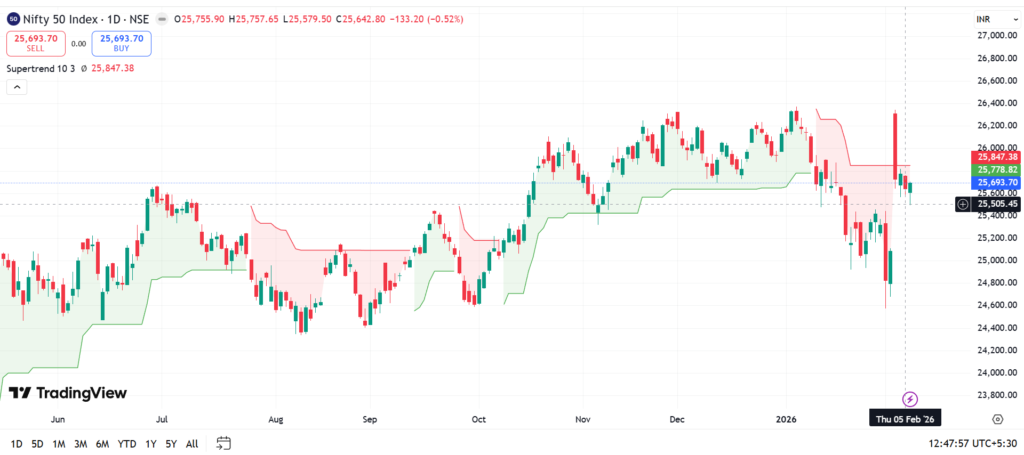
If the Supertrend line is below the price, it usually signals an upward trend. When it appears above the price, it suggests a downward trend. This makes it easier for beginners to spot trading opportunities.
The Supertrend indicator is easy to use because it is built using only two settings—period and multiplier. These simple inputs make it suitable for new traders who are just learning technical analysis.
2. VWAP
The second important intraday trading indicator is VWAP (Volume Weighted Average Price). This indicator is widely used by traders to understand whether a stock is trading above or below its average price for the day, based on both price and trading volume.
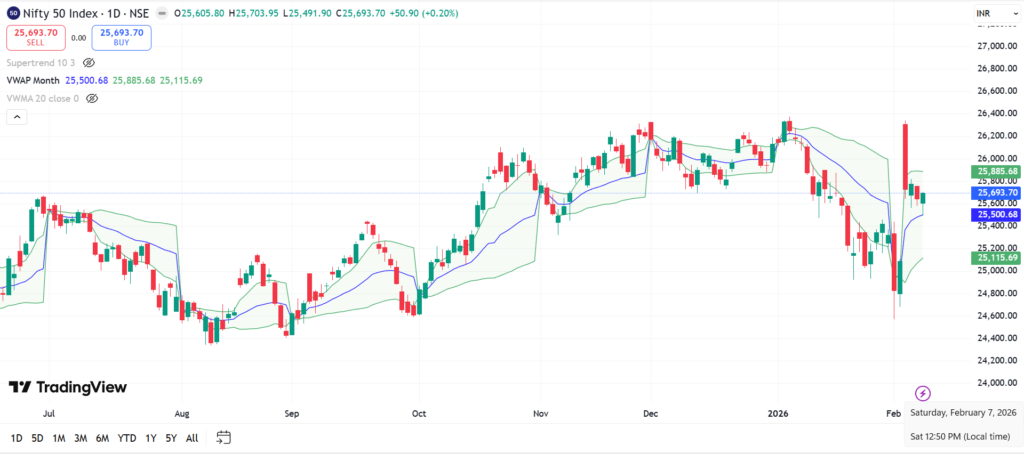
In intraday trading, tracking volume is very important because it shows the strength behind price movements. VWAP combines price and volume to give a clearer picture of where most trading activity has taken place during the session.
In simple terms, VWAP represents the average price at which a stock has traded throughout the day, weighted by volume. It helps traders judge whether buying or selling at a particular level is reasonable compared to the day’s overall trading activity.
3. CPR
The Central Pivot Range (CPR) indicator is used in intraday trading to identify important price levels where stocks may find support or resistance. These levels help traders decide where to enter or exit trades during the day.
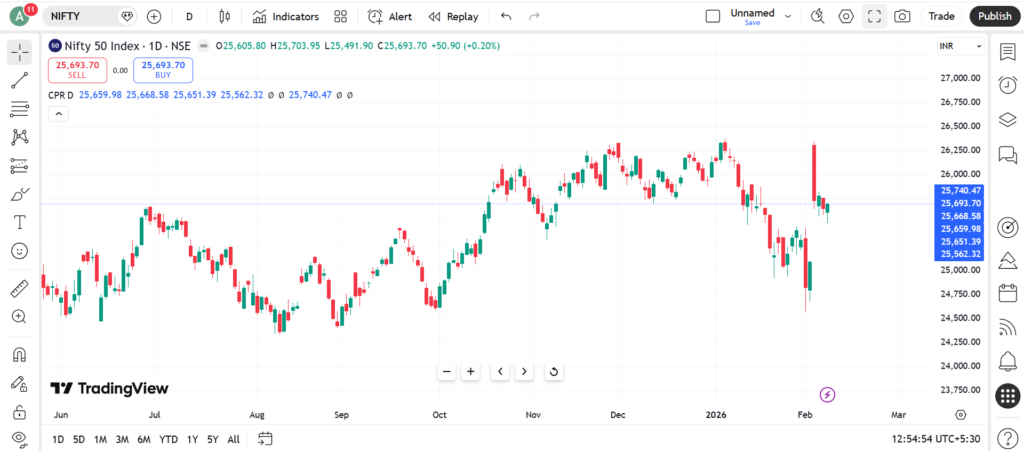
CPR is popular among intraday traders because it is easy to understand and works well in different market conditions. It gives a quick view of possible turning points on the chart.
The CPR indicator consists of three main levels that appear on the price chart. These are called pivot points—the top central pivot marks the upper level, while the bottom central pivot marks the lower level. Together, these levels form a price range that traders watch closely for potential breakouts or reversals.
4. Bollinger Bands
Bollinger Bands are a popular intraday trading indicator used to measure price volatility and spot possible buy or sell opportunities. The tool appears on the price chart and has three lines—a middle moving average and two outer bands.
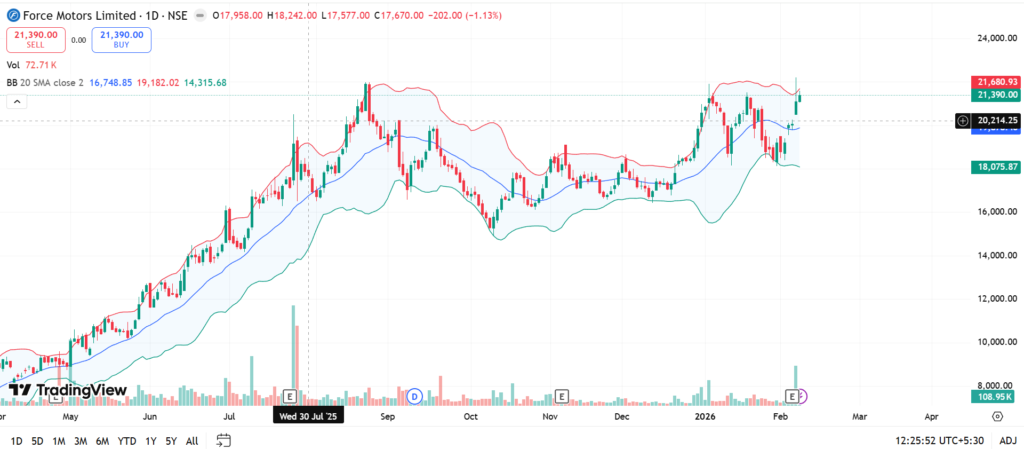
When the bands widen, it shows strong price movement. When they narrow, it suggests low volatility and a possible breakout. Traders often watch how price behaves near the upper and lower bands to judge short-term overbought or oversold conditions.
Because Bollinger Bands are easy to use and work well with other indicators, they are widely preferred by intraday traders.
How the stock market works
Intraday Trading Risk Control Strategies for Beginners
Two of the most important tools used in intraday trading are stop-loss and take-profit orders.
A stop-loss helps limit your losses when the market moves against your expectation. It automatically closes the trade once a certain price level is reached, preventing bigger damage to your capital.
A take-profit level represents your target gain from a trade. When the price reaches this level, the position is closed and profits are locked in. Using both together creates discipline and removes emotional decision-making from trading.
Pros and Cons of Intraday Trading
✅ Pros
- Requires lower initial capital compared to long-term investing.
- Offers the potential to earn quick profits within a single trading session.
- Works well in highly volatile market conditions.
- Funds are locked only for a short time, allowing frequent trading opportunities.
- Traders can go both long and short, helping balance market direction risks.
❌ Cons
- Losses can occur as quickly as profits, making income unpredictable.
- Emotional stress from wins or losses can impact mental health.
- Breaking trading rules or ignoring your plan can lead to repeated mistakes.
- Sudden medium-term market reversals may cause losses across positions.
- Strong trending markets can make it harder to capture consistent short-term gains.
To improve your trading skills and learn professional strategies, consider enrolling in a structured stock market trading mentorship program guided by experienced traders.
Conclusion
Intraday trading is fast-paced and rewarding for traders who make disciplined and informed decisions. While it can generate quick profits, it also carries risks and emotional pressure.
The key to long-term success lies in following a proper trading plan, using risk management tools, and keeping emotions out of decision-making. Traders who stay consistent and focused are more likely to build sustainable results in the stock market.
Frequently Asked Questions
Q 1. What is intraday trading in the stock market?
Ans. Intraday trading means buying and selling shares on the same day during market hours. All open positions are closed before the market ends.
Q 2. Is intraday trading good for beginners?
Ans. Yes, beginners can try intraday trading if they first learn the basics, practise with paper trading, and strictly follow risk-management rules.
Q 3. How much money is required to start intraday trading?
Ans. You can start with a small amount, depending on your broker and margin rules. However, beginners should always trade with money they can afford to lose.
Q 4. What is the best time for intraday trading?
Ans. The first two hours after the market opens and the last hour before closing usually see high volume and price movement, making them popular for intraday traders.
Q 5. Which indicators are best for intraday trading?
Ans. Commonly used indicators include Supertrend, VWAP, CPR, Bollinger Bands, RSI, and moving averages.
Q 6. How can I reduce losses in intraday trading?
Ans. Always use stop-loss orders, fix your position size, follow a trading plan, and avoid emotional decisions.
Q 7. Can intraday trading give daily profits?
Ans. No strategy can guarantee daily profits. Markets change every day, and losses are part of trading. Consistency and discipline matter more than daily gains.
Q 8. Is intraday trading risky?
Ans. Yes, intraday trading involves high risk because of fast price movements. Proper risk management and learning are essential.
Q 9. Should I do intraday trading full-time?
Ans. Beginners should start part-time while learning. Going full-time only makes sense after building consistent performance and experience.